Geometry.Net - the online learning center
Home  - Pure_And_Applied_Math - Differential Equations
e99.com Bookstore
  
Images 
Newsgroups
Page 3     41-60 of 180    Back | 1  | 2  | 3  | 4  | 5  | 6  | 7  | 8  | 9  | Next 20

         Differential Equations:     more books (100)
  1. The Qualitative Theory of Ordinary Differential Equations: An Introduction by Fred Brauer, John A. Nohel, 1989-02-01
  2. Numerical Solution of Partial Differential Equations: An Introduction by K. W. Morton, D. F. Mayers, 2005-04-11
  3. Ordinary Differential Equations (Universitext) by Vladimir I. Arnold, 2006-07-26
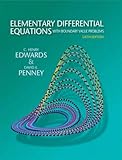
  4. Elementary Differential Equations (6th Edition) by Henry Edwards, David Penney, 2007-12-08
  5. A First course in Differential Equations: Student Solution Manual for Zill's Classic Fifth Ed. by Warren S.Wright, Carol D. Wrigth, 2000-12-12
  6. Schaum's Easy Outline Differential Equations by Richard Bronson, 2003-02-21
  7. Introduction to Partial Differential Equations and Hilbert Space Methods by Karl E. Gustafson, 1997-07-10
  8. Elementary Differential Equations W/Boundary Value Problems (Student Solutions Manual) by EDWARDS, 2003-10
  9. Theory of Ordinary Differential Equations by Earl A. Coddington, Norman Levinson, 1984-06
  10. Differential Equations: A Modern Approach by Harry Hochstadt, 1975-08
  11. Introduction to Ordinary Differential Equations, Student Solutions Manual, 4th Edition by Shepley L. Ross, 1989-03
  12. Numerical Partial Differential Equations: Finite Difference Methods (Texts in Applied Mathematics) by J.W. Thomas, 1998-11-06
  13. Finite Difference Schemes and Partial Differential Equations by John Strikwerda, 2007-10-31
  14. Differential Equations and Linear Algebra (3rd Edition) by Stephen W. Goode, Scott A. Annin, 2007-03-23

41. Real Time Tutor - Systems Of Differential Equations
Draw direction fields for an autonomous system of two differential equations. Estimate solutions using RungeKutter methods. See the algorithms.
http://www.realtimetutor.com/ODESystemsForm.aspx
For exponents use ^. For example x squared is written x^2. Multiplicaiton use *. For examle 2 times x is written 2*x. Recognized trig functions are cos(x), sin(x), tan(x), arccos(x), arcsin(x), arctan(x), cosh(x), sinh(x), tanh(x). The exponential function base e is written e(x) and the natural logarithm is ln(x). So for example you can enter a function like sin(2*x*t) + e(x+y) - x^3 The result is The result is Iterations = Epsilon = (Do not enter a step size h.) For Runge-Kutta 4 with tolerance enter the additional fields: t = The value of t for which x and y will be estimated h = Step size yi = xi = ti = Initial value of y Initial value of t Inital value of x For initial value problems enter the following: dy/dt = g(t,x,y) = dx/dt = f(t,x,y) = Systems of Ordinary Differential Equations Enter a system of two ordinary differential equations in the following form: Enter the interval Left end-pt Right end-pt Draw the direction field for an autonomous system dx/dt = f(x,y), dy/dt= g(x,y) Code Home Differential Equations Tool Graphing Calculator Check out our new math tees!!

42. SpringerLink - Publication
(Birkhäuser) Tables of conents from vol.4 (1997) on. Full text to subscribers.
http://link.springer-ny.com/link/service/journals/00030/
Articles Publications Publishers
Home

Publication NoDEA : Nonlinear Differential Equations and Applications Publisher: Birkh¤user Verlag AG ISSN: 1021-9722 (Paper) 1420-9004 (Online) Subject: Mathematics Issues in bold contain content you are entitled to view. Volume 12 Number 1 / May 2005 Request a sample Volume 11 Number 4 / December 2004 Number 3 / September 2004 Number 2 / June 2004 Number 1 / February 2004 Volume 10 Number 4 / November 2003 Number 3 / July 2003 Number 2 / May 2003 Number 1 / May 2003 ... Request a sample Volume 9 Number 4 / November 2002 Number 3 / July 2002 Number 2 / April 2002 Number 1 / March 2002 Volume 8 Number 4 / November 2001 Number 3 / July 2001 Number 2 / June 2001 Number 1 / May 2001 Volume 7 Number 4 / December 2000 Number 3 / November 2000 Number 2 / August 2000 Number 1 / February 2000 Volume 6 Number 4 / December 1999 Number 3 / August 1999 Number 2 / May 1999 Number 1 / February 1999 Volume 5 Number 4 / November 1998 Number 3 / August 1998 Number 2 / April 1998 Number 1 / January 1998 Volume 4 Number 4 / October 1997 Number 3 / July 1997 Number 2 / April 1997 Number 1 / January 1997 First page
Previous page
Next page
Last page
Linking Options
About This Journal Editorial Board Manuscript Submission Quick Search Search within this publication...

43. Distance Calculus At Suffolk University
Tutorials on calculus subjects ranging from precalculus to differential equations. Math tools and resource links.
http://www.calculus.net/
Questions?
E-Mail
: info@distancecalculus.com
or AIM/Chat : DistanceCalculus
or Call Us @ [USA] 617.497.2096 Home Main Calculus Sequence Liberal Arts Calculus Introduction to Computer Science - ... How Quickly Can I Finish The Course?
Celebrating Our 8th Year
of Teaching On-Line Suffolk University is a
fully-accredited
university
-one of the "big 25" universities in Boston, Massachusetts-
Internationally known for its Law and Management Schools All Distance Calculus Courses
are offered through the
Computer Science Department at Suffolk University. DISTANCE CALCULUS COURSE OFFERINGS Engineering/Science Calculus Courses (each available in 3 or 4 Semester Units) Liberal Arts General Education Courses Introduction to Computer Science [using PHP] (3 Semester Units each) Are You Trying To Learn Calculus In A Lecture Hall? Are You Bored? Frustrated? Can't Fit Calculus Into Your Work/Class/Life Schedule? Need to Try Calculus a Different Way? The Usual: Calculus in a Lecture Hall
  • a big classroom, sometimes with hundreds of other students
  • classtime that may not fit into your work or course schedule
  • writing down notes like a stenographer
  • noisy lecture halls make it difficult to concentrate
  • long, boring homework assignments

44. SpringerLink - Publication
Visual Differential Equation Solver AppletThis java applet displays solutions to some common differential equations. Zip archive of this applet. Another differential equation applet.
http://link.springer-ny.com/link/service/journals/00526/
Articles Publications Publishers
Home

Publication Calculus of Variations and Partial Differential Equations Publisher: Springer-Verlag GmbH ISSN: 0944-2669 (Paper) 1432-0835 (Online) Subject: Computer Science Mathematics Issues in bold contain content you are entitled to view. Number -1 / 2005 Volume 24 Number 2 / October 2005 Number 1 / September 2005 Volume 23 Number 4 / August 2005 Number 2 / June 2005 Number 1 / May 2005 Volume 22 Number 4 / April 2004 Number 3 / March 2005 Number 2 / February 2005 Number 1 / January 2005 ... Request a sample Volume 21 Number 4 / December 2004 Number 3 / November 2004 Number 2 / October 2004 Number 1 / September 2004 Volume 20 Number 4 / August 2004 Number 3 / July 2004 Number 2 / June 2004 Number 1 / May 2004 Volume 19 Number 4 / April 2004 Number 3 / April 2004 Number 2 / January 2004 Number 1 / December 2003 ... Request a sample Volume 18 Number 4 / December 2003 Number 3 / November 2003 Number 2 / October 2003 Number 1 / September 2003 Volume 17 Number 4 / August 2003 Number 3 / July 2003 Number 2 / June 2003 Number 1 / May 2003 Jump to volumes: Most Recent 16 to 9 8 to 3 First page
Previous page
Next page

Last page

Jump to Volumes Most Recent 16 to 9 8 to 3 Linking Options About This Journal Editorial Board Manuscript Submission Quick Search Search within this publication...

45. Software
Code from the Institute of Numerical Mathematics of Martin Luther University.
http://cantor1.mathematik.uni-halle.de/institute/numerik/software/

Fachbereich Mathematik und Informatik
Software
  • ROWMAP A ROW-code of order 4 with Krylov techniques for large stiff ODEs written by H. Podhaisky B.A. Schmitt and R. Weiner
  • EPTRK Explicit pseudo two-step RK methods of order 5 and 8 for parallel computers with memory. Written by N.H. Cong, H. Podhaisky . and R. Weiner
  • Partitioned Rosenbrock method of order 4 for multibody systems (index 3) with 8 stages. Written by J. Wensch
  • EPTRKN Two explicit pseudo Runge-Kutta-Nystrom methods of order 6 and 10. Fortran-code
  • NYRA A Runge-Kutta-Nystroem-type block predictor- corrector method for parallel computers with shared memory
    Written by N.H. Cong

46. Forward To New DiME Website
DIME Project Data Local Iterative Methods for the Efficient Solution of Partial differential equations. People, publications, software.
http://wwwbode.cs.tum.edu/Par/arch/cache/
You get forwarded to the new DiME Webpage...

47. Differential Equation - Wikipedia, The Free Encyclopedia
For instance, a firstorder differential equation contains only first derivatives. The study of differential equations is a wide field in both pure and
http://en.wikipedia.org/wiki/Differential_equation
Differential equation
From Wikipedia, the free encyclopedia.
In mathematics , a differential equation is an equation in which the derivatives of a function appear as variables. Differential equations have many applications in physics and chemistry , and are widespread in mathematical models explaining biological , social, and economic phenomena. Differential equations are divided into two types: The order of a differential equation is that of the highest derivative that it contains. For instance, a first-order differential equation contains only first derivatives. The study of differential equations is a wide field in both pure and applied mathematics . Pure mathematicians study the types and properties of differential equations, such as whether or not solutions exist, and should solutions exist, whether those solutions are unique. Applied mathematicians, physicists and engineers are usually more interested in how to compute solutions to differential equations. These solutions are then used to design bridges, automobiles, aircraft, sewers, etc. Often, these equations do not have closed form solutions and are solved using numerical methods Famous differential equations include:

48. SPRINT
Modular generalpurpose package written in Fortran 77 for the numerical solution of systems of differential-algebraic equations and 1D partial differential equations. It is used at Shell Research Laboratories and at several UK, Europe and North American Universities, and it forms the basis of the underlying solver in the SPRINT2D and SPRINT3D software.
http://www.scs.leeds.ac.uk/cpde/SPRINT1.html
SPRINT Software
(Back to the CPDE Unit Home Page) Development of the original SPRINT (Software for PRoblems IN Time) software took place from 1982 to 1988 and was primarily funded by Shell Research at Thornton. SPRINT is a modular general-purpose package written in Fortran 77 for the numerical solution of systems of differential-algebraic equations and 1D partial differential equations. It is used at Shell Research Laboratories and at several UK, Europe and North American Universities, and it forms the basis of the underlying solver in the and software. A C version also exists. The philosophy behind the software is described in , the modified Gear's method integrator in , the new adaptive theta method in , and the improved differential-algebraic integrators in and . The new spectral method used in the spatial discretisation is described in , and the new finite difference discretisation in . Complete descriptions of the software and example applications, including examples with integro-differential equations and adaptive meshes are given in and . The SPRINT package is described in detail in The majority of the original SPRINT software has been implemented inside the NAG Fortran Library , in subchapters D02N and D03P (since Mark 14). The original was extended and re-written for the NAG Library as described in

49. Partial Differential Equation - Wikipedia, The Free Encyclopedia
Partial Differential Equation From MathWorldSome partial differential equations can be solved exactly in Mathematica using Fortunately, partial differential equations of secondorder are often
http://en.wikipedia.org/wiki/Partial_differential_equation
Partial differential equation
From Wikipedia, the free encyclopedia.
In mathematics , and in particular analysis , a partial differential equation PDE ) is an equation involving partial derivatives of an unknown function . The idea is to describe a function indirectly by a relation between itself and its partial derivatives , rather than writing down a function explicitly. The relation should be local - it should connect the function and its derivatives in the same point. A solution of the equation is any function satisfying this relation. A PDE usually has several solutions; a problem often includes additional boundary conditions which constrain the solution set. Where ordinary differential equations have solutions that are families with each solution characterized by the values of some parameters, for a PDE it is more helpful to think that the parameters are function data (informally put, this means that the set of solutions is much larger). That is true fairly generally, unless the equations are heavily over-determined. Partial differential equations are ubiquitous in science, as they describe phenomena such as

50. Statistical Laboratory: J. R. Norris
Research interests Topics in probability and analysis, including stochastic differential equations, Malliavin calculus, analysis of heat kernels, homogenization, Brownian motion and Brownian sheet, stochastic differential geometry, models of coagulation and coalescence.
http://www.statslab.cam.ac.uk/Dept/People/norris.html
University of Cambridge Mathematics Statistical Laboratory People / J. R. Norris
Dr James Norris
Email address : J.R.Norris@statslab.cam.ac.uk Research interests : Topics in probability and analysis, including stochastic differential equations, Malliavin calculus, analysis of heat kernels, homogenization, Brownian motion and Brownian sheet, stochastic differential geometry, models of coagulation and coalescence. Let me describe in a little more detail my interest in coagulation. In diverse contexts one is led to consider a large system of particles (bubbles, droplets, stars, molecules...) which, over time, stick together to form larger particles. This can be modelled as a Markov random process. The challenge is to discover the possible sorts of behaviour of these systems: is there a non-random approximation giving the evolving concentrations of particles of various masses, do most of the particles eventually (or instantaneously) stick together, do spatial fluctuations matter, does the mass distribution, suitably renormalised, converge in long time? These are questions of interest to scientists in many fields but a rigorous mathematical theory has only partly emerged. Techniques relevant to the analysis of these processes are martingales, weak convergence, coupling of processes and plenty of careful estimates. Further details can be found on my Personal Home Page
Or go to Statistical Laboratory Members University of Cambridge Mathematics Statistical Laboratory ... People / J. R. Norris

51. Ordinary Differential Equations -- From MathWorld
Calculus and Analysis differential equations v. Ordinary differential equations Lagrange s Equation Riemann PDifferential
http://mathworld.wolfram.com/topics/OrdinaryDifferentialEquations.html
INDEX Algebra Applied Mathematics Calculus and Analysis Discrete Mathematics ... Alphabetical Index
DESTINATIONS About MathWorld About the Author Headline News ... Random Entry
CONTACT Contribute an Entry Send a Message to the Team
MATHWORLD - IN PRINT Order book from Amazon Calculus and Analysis Differential Equations Ordinary Differential Equations Abel's Differential Eq... Generalized Hypergeome... Ordinary Differential... Abel's Differential Eq... ... Ordinary Differential...

52. Hassane BOUZAHIR
Neutral Functional differential equations with infinite delay. Preprints, CV, personal interests.
http://www.geocities.com/hbouzahir
Assistant Prof. Dr. Hassane BOUZAHIR
E-mail: bouzahir(AT)esta.ac.ma
Main
Personal Education ... Quotation
WELCOME TO THE FIRST PERSONAL HOME PAGE AT ENSA-AGADIR
Hassane BOUZAHIR
Doctor of Cadi Ayyad University
Former ATER at University of Pau
Currently With
ENSA-AGADIR
E-mail: bouzahir(AT)esta.ac.ma or hbouzahir(AT)hotmail.com
School Address: ENSA BP 33/S, Ibn Zohr University, Blvr St. Abderrahim Bouabid (former Al-Hamra Ave) known by attiknia, Agadir 80 000, MOROCCO School Phone: (++212) (0) 48232583 School Fax: (++212) (0) 48227824 Personal Handy: (++212) (0) 63486572
Main Personal Education Dissertations ... Quotation
Maintained by: Hassane Bouzahir
Last update: November 24, 2003

53. Wadsworth Home
Ordinary differential equationsInformal postscript notes for a course by Sheldon Newhouse at Michigan State.
http://diffeq.brookscole.com/
@import url(/stylesheets/bonus.css);
Home
Contact Us Find Your Rep BookShop ...
Thomson Learning
is a division of The Thomson Corporation

54. Zuse Institute Berlin - Numerical Analysis And Modelling - CodeLib
Fortran 77 codes for large systems of linear equations, systems of nonlinear equations, nonlinear least squares, ordinary differential equations, and quadrature.
http://www.zib.de/Numerik/numsoft/CodeLib/index.en.html
Numerical Analysis and Modelling - CodeLib

55. Electronic Journal Of Differential Equations
Please visit the new location of the Electronic Journal of differential equations home page and update your bookmarks.
http://www.ma.hw.ac.uk/EJDE/welcome.html
The link you have encountered has been moved to a new location.
Please visit the new location of the Electronic Journal of Differential Equations home page and update your bookmarks.

56. MEDEA: Matrix Exponential Differential Equation Algorithm
Algorithm for the numerical integration of systems of ordinary differential equations arising in chemical problems. C ocde, free to use.
http://www.caspur.it/~castri/MEDEA/index.htm
MEDEA M atrix E xponential D ifferential E quation A lgorithm
Academic version of the algorithm described in:
F. Aluffi-Pentini, V. De Fonzo, V. Parisi
A novel algorithm for the numerical integration of systems of ordinary differential equations arising in chemical problems
Journal of Mathematical Chemistry, Vol. 33, No. 1, 2003 It can be freely used, but please reference the above paper. see also:
useful information: the package: sample programs: sample results: for any question:

57. Interactive Differential Equations
differential equations NotesPostscript notes on various topics in differential equations by Bruce Ikenaga.
http://www.aw.com/ide/

58. Graphing Calculator
Symbolic and numeric methods for visualizing two and three dimensional mathematical objects. Supports differential equations and integration. Available for Macintosh and Windows.
http://www.pacifict.com/
Graphing Calculator
for Macintosh and Windows
Easy to learn. Easy to use.
Type an equation. See the result. Tour Downloads Users Gallery Order here ... Story

59. Modules For Differential Equations
SecondOrder Linear Homogeneous differential equations with Constant Coefficients Spring Motion Forced Spring Systems, I Matrix Operations
http://www.math.duke.edu/education/ccp/materials/diffeq/
Click on a module name below to see an OVERVIEW of its contents. Modules Helper Application Tutorial Numerical Solutions of Differential Equations World Class Sprints Logistic Growth Model ... The van der Pol System Return to CCP Homepage Return to CCP Materials modules at math.duke.edu

60. Dorroh.html
Professor Emeritus of Mathematics at Louisiana State University. His research interests are in the area of semi groups of linear operators and other aspects of the underlying theory of partial differential equations. Publication list.
http://www.math.lsu.edu/~dorroh/
J. R. Dorroh
Ph.D. 1962, University of Texas at Austin
Research Interests: Semigroups of linear and nonlinear transformations , Linear and nonlinear evolution equations (partial differential equations) , Control theory (optimal control)
Click here for selected ( publications.
Click here for miscellaneous biographical ( items.
Click here for MATLAB ( documentation.
Click here for a simple online MATLAB ( tutorial.
Click here for technical help with scientific and engineering computing ( needs.
Click here for basic help with ( unix.
Address:
J. R. Dorroh Department of Mathematics Louisiana State University Baton Rouge, LA 70803 Phone: (225)-578-1567 Fax: (225)-578-4276 e-mail: dorroh@math.lsu.edu

Page 3     41-60 of 180    Back | 1  | 2  | 3  | 4  | 5  | 6  | 7  | 8  | 9  | Next 20

free hit counter