Geometry.Net - the online learning center
Home  - Pure_And_Applied_Math - Differential Equations
e99.com Bookstore
  
Images 
Newsgroups
Page 1     1-20 of 180    1  | 2  | 3  | 4  | 5  | 6  | 7  | 8  | 9  | Next 20

         Differential Equations:     more books (100)
  1. Elementary Differential Equations and Boundary Value Problems, Textbook and Student Solutions Manual by William E. Boyce, Richard C. DiPrima, 2004-08-10
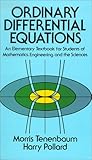
  2. Ordinary Differential Equations by Morris Tenenbaum, Harry Pollard, 1985-10-01
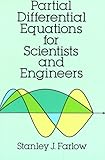
  3. Partial Differential Equations for Scientists and Engineers (Dover Books on Advanced Mathematics) by Stanley J. Farlow, 1993-09-01
  4. Student Solutions Manual to accompany Boyce Elementary Differential Equations and Boundary Value Problems by Charles W. Haines, William E. Boyce, et all 2004-08-06
  5. Student Solutions Manual for Blanchard/Devaney/Hall's Differential Equations, 3rd by BLANCHARD/DEVANEY/HALL, 2005-10-01
  6. Differential Equations Computing and Modeling (4th Edition) by Henry Edwards, David Penney, 2007-08-10
  7. Student Resource and Solutions Manual for Zill's A First Course in Differential Equations with Modeling Applications, 8th by ZILL, 2004-12-21
  8. Introduction to Partial Differential Equations with Applications by E. C. Zachmanoglou, Dale W. Thoe, 1987-02-01
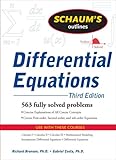
  9. Schaum's Outline of Differential Equations, 3rd edition (Schaum's Outlines) by Richard Bronson, Gabriel Costa, 2006-06-15
  10. Elementary Differential Equations 8th Edition with Differential Equations Matlab 2nd Edition Set by William E. Boyce, 2005-01-26
  11. Elementary Differential Equations with Boundary Value Problems (6th Edition) by Henry Edwards, David Penney, 2007-12-10
  12. Differential Equations Demystified by Steven G. Krantz, 2004-08-24
  13. Differential Equations, Student Solutions Manual: An Introduction to Modern Methods and Applications by James R. Brannan, William E. Boyce, 2007-02-02
  14. A First Course in Differential Equations: The Classic Fifth Edition by Dennis G. Zill, 2000-12-08

1. Electronic Journal Of Differential Equations Monographs
A group of free papers on partial differential equations.
http://ejde.math.swt.edu/Monographs/01/abstr.html

2. Interactive Learning In Calculus And Differential Equations With Applications
A classroom learning environment based on Mathematics notebooks.
http://www.ma.iup.edu/projects/CalcDEMma/Summary.html
Interactive Learning in Calculus and Differential Equations with Applications
Click on this picture for a description of how it was generated. The Mathematics Department at Indiana University of Pennsylvania (IUP) established a computerized learning environment, consisting of a classroom with 31 Macintosh Centris 650s and a laboratory with 12 Macintosh LCs, all equipped with Mathematica . Mathematica's notebook feature enables science students to actively learn calculus and differential equations with guided discovery and exploration. The project was funded through a National Science Foundation Instrumentation and Laboratory Improvement grant, number DUE-9351896. IUP's project has several significant attributes.
  • The Mathematics Department is fully implementing this curriculum in all sections of its science calculus sequence and in the two-semester differential equations sequence.
  • Eleven faculty, comprising approximately one third of IUP's mathematics faculty, are coinvestigators.
  • The curricular revisions are being coordinated with the science departments at IUP, who are also integrating active learning and technology in their courses. This collaboration, based on common pedagogical goals and software, will bring more scientific applications into mathematics courses and strengthen the use of mathematics in science courses.
  • All students in the Mathematics Department are involved. Mathematics and Applied Mathematics majors are required to take Differential Equations, and Mathematics Education majors have a unit devoted to the project in the teacher preparation course, Computers and Calculators in Secondary Mathematics.

3. DIFFERENTIAL EQUATIONS AND OSCILLATIONS
Many problems in physics are described by differential equations. As a complete discussion of differential equations is beyond the scope of this chapter we will deal only with linear first and second order ordinary differential equations.
http://www.physics.orst.edu/~rubin/nacphy/ComPhys/DIFFEQ/mydif2/
DIFFERENTIAL EQUATIONS AND OSCILLATIONS
The differential nature of these physical laws in turn may be a reflection of our use of continuous variables like position and probability. (The use of differential equations may also reflect traditionally-trained physicists viewing problems in differential forms). As a complete discussion of differential equations is beyond the scope of this chapter we will deal only with linear first and second order ordinary differential equations. We start with deriving two methods to solve first order differential equations numerically ( Euler and Runge-Kutta ). These methods can be extended to solve second order differential equations which we will do using the harmonic oscillator and the realistic pendulum as examples.

4. Chris Athorne's Home Page
The site describes research activities of the differential equations group in the mathematics department at the university of Glasgow, UK, and provides some resources of a general nature.
http://www.maths.gla.ac.uk/~ca/
This is not a Still Life Perspective Life 2005 Melancholia Resonance ... Winterreise

5. TMR Network Webpage : Home
European TMR network coordinated at the Oxford Centre for Industrial and Applied Mathematics.
http://www.maths.ox.ac.uk/ociam/TMR/

6. Electronic Journal Of Differential Equations
Full text available in DVI, PDF, PS and TeX formats. Searchable index.
http://ejde.math.swt.edu/

7. S.O.S. Math - Differential Equations
Introduction and First Definitions. Modeling via differential equations. First Order differential equations. Linear Equations. Separable
http://tmsyn.wc.ask.com/r?t=an&s=hb&uid=24312681243126812&sid=343126

8. S.O.S. Math
Contains tutorials covering algebra, geometry, calculus, differential equations, matrices, and complex variables. Reviews the most important
http://tmsyn.wc.ask.com/r?t=an&s=hb&uid=24312681243126812&sid=343126

9. Difference Equations To Differential Equations
By Dan Sloughter. Published in PS/PDF with applets under GPL.
http://math.furman.edu/~dcs/book/
Difference Equations to Differential Equations
An introduction to calculus
Each section of the text is available in both PostScript and Portable Document Format (PDF) formats. If you require a PostScript viewer, click here for information on obtaining and installing a PostScript viewer. If you require a PDF viewer, click here or here for information on obtaining and installing a PDF viewer. Difference Equations to Differential Equations was written with the help of Tex DVIPS xdvi PDFTeX ... Mathematica A companion multi-variable calculus text, The Calculus of Functions of Several Variables is available here Send e-mail to Dan Sloughter to report any errors. Chapter Section Applet Date PostScript PDF Sequences, limits,
and difference equations
Calculus: areas and tangents Area of a circle
Tangent line for a parabola
154 kb 103 kb Sequences
235 kb
129 kb The sum of a sequence
128 kb
110 kb Difference equations
210 kb
113 kb Nonlinear difference equations Inhibited population growth 291 kb 106 kb Functions and
and their properties
Functions and their graphs
406 kb
132 kb Trigonometric functions Square wave approximation
Sound wave approximation
413 kb 138 kb Limits and the notion of continuity
355 kb
141 kb Continuous functions
188 kb
103 kb Some consequences of continuity 202 kb 105 kb Best affine approximations Best affine approximations Affine approximations 206 kb 111 kb Best affine approximations, derivatives and rates of change

10. Distance Calculus At Suffolk University
Tutorials on calculus subjects ranging from precalculus to differential equations. Math tools and resource links.
http://tmsyn.wc.ask.com/r?t=an&s=hb&uid=24312681243126812&sid=343126

11. SpringerLink - Publication
www.kluweronline.com/issn/10407294/contents Electronic Journal of Qualitative Theory of differential equationsFree research papers on differential equations.
http://www.kluweronline.com/issn/0012-2661/contents
Articles Publications Publishers
Home

Publication Differential Equations ISSN: 0012-2661 (Paper) 1608-3083 (Online) Subject: Mathematics Issues in bold contain content you are entitled to view. Volume 41 Number 6 / June 2005 Number 5 / May 2005 Number 4 / April 2005 Number 3 / March 2005 ... Request a sample Volume 40 Number 12 / December 2004 Number 11 / November 2004 Number 10 / October 2004 Number 9 / September 2004 ... Number 1 / January 2004 Volume 39 Number 12 / December 2003 Number 11 / November 2003 Number 10 / October 2003 Number 9 / September 2003 ... Number 1 / January 2003 Volume 38 Number 12 / December 2002 Number 11 / November 2002 Number 10 / October 2002 Number 9 / September 2002 ... Number 1 / January 2002 Volume 37 Number 12 / December 2001 Number 11 / November 2001 Number 10 / October 2001 Number 9 / September 2001 ... Number 1 / January 2001 Volume 36 Number 12 / December 2000 First page
Previous page
Next page
Last page
Linking Options
About This Journal Editorial Board Manuscript Submission Quick Search Search within this publication...

12. Numerical Mathematics.
Features programs that will find solutions for functions, equations, differential equations, regression, approximation, interpolation, linear algebra, integration, maxima and minima, and 3D graphing. Includes free download demonstrations and general explanation of methods used.
http://www.numericalmathematics.com/
numerical mathematics free downloads software freeware download free math advanced numerical mathematics mathematical program derivatives equations calculus linear algebra differential equations integration matrix integral interpolation approximation roots maxima minima functions optimization multiple integrals quadrature nonlinear multivariable functions solutions plotting Fourier multivariate functions graphics matrices analysis numerical mathematics free downloads software freeware download free math advanced numerical math mathematical program derivatives equations calculus linear algebra differential equations integration matrix integral interpolation approximation roots maxima minima functions optimization multiple integrals quadrature nonlinear multivariable functions solutions plotting Fourier multivariate functions graphics matrices analysis
Numerical Mathematics
is the branch of mathematics that develops, analyzes, and applies methods to compute with finite precision numbers. Numerical mathematics is a vast field whose importance cannot be over-emphasized. The solution of real-life problems quite often can't be achieved without resorting to the methods of numerical mathematics.

13. Electronic Journal Of Differential Equations
ELECTRONIC JOURNAL OF differential equations (EJDE)
http://tmsyn.wc.ask.com/r?t=an&s=hb&uid=24312681243126812&sid=343126

14. ODE Software For MATLAB
These are the versions described in the third edition of Ordinary differential equations using MATLAB. For use with version 6.0 of MATLAB.
http://tmsyn.wc.ask.com/r?t=an&s=hb&uid=24312681243126812&sid=343126

15. BU Differential Equations Project
Selected Articles on Teaching differential equations. Teaching differential equations With a Dynamical Systems Viewpoint By Paul Blanchard.
http://math.bu.edu/odes/
The Boston University
Ordinary Differential Equations Project
Project Directors:
Paul Blanchard

Robert L. Devaney

Glen R. Hall

e-mail: odes@math.bu.edu
This project, originally funded by two grants from the National Science Foundation, promotes the use of ideas from the modern theory of dynamical systems in the traditional sophomore-level course in differential equations. Qualitative, analytic, and numerical approaches are stressed throughout the course. We have written a textbook published by Brooks/Cole that supports our approach, and occasionally we conduct workshops at various sites around the country.
Please note:
Our publisher is Brooks/Cole Publishing Co., a division of Thomson Learning. To contact Brooks/Cole for faculty support, call 800-423-0563 ( ISBN numbers and information about ancillaries
Available at this site:
Upcoming Workshops and Talks
  • MAA MathFest, Project NExT Workshops, August 3, 2005
About the text Table of Contents Faculty Support and Ancillary Material
    How to obtain instructor's manual, student solutions manual, desk copies, etc.
Spanish Edition Who are we?

16. PORT Mathematical Subroutine Library
Collection of Fortran 77 routines that address many traditional areas of mathematical software, including approximation, ordinary and partial differential equations, linear algebra and eigensystems, optimization, quadrature, root finding, special functions, and Fourier transforms, but excluding statistical calculations. PORT stands for Portable, Outstanding, Reliable, and Tested.
http://www.bell-labs.com/project/PORT/
PORT Mathematical Subroutine Library
Research Work Of various current and former Bell Labs people, including
Jim Blue
Phyllis Fox
Wayne Fullerton
David Gay
Eric Grosse

Andy Hall
Linda Kaufman

Wes Petersen
Norm Schryer
The PORT Mathematical Subroutine Library (third edition) is a collection of Fortran 77 routines that address many traditional areas of mathematical software, including approximation, ordinary and partial differential equations, linear algebra and eigensystems, optimization, quadrature, root finding, special functions, and Fourier transforms, but excluding statistical calculations. PORT stands for Portable, Outstanding, Reliable, and Tested.
Available Reference Information
Non-Commercial License Agreement and Available Software
Tue Oct 7 15:12:13 EDT 1997 ehg@lucent.com Privacy statement Agere

17. Electronic Journal Of Qualitative Theory Of Differential Equations
Free research papers on differential equations.
http://tmsyn.wc.ask.com/r?t=an&s=hb&uid=24312681243126812&sid=343126

18. About The Book
The study of differential equations is a beautiful application of the ideas and Second, many of the most important differential equations are nonlinear,
http://math.bu.edu/odes/philosophy.html
From the preface of:
Differential Equations, First Edition, by Blanchard, Devaney, Hall. Published by Brooks/Cole Publishing Co., 1998. ISBN 0-534-34550-6.
The study of differential equations is a beautiful application of the ideas and techniques of calculus to our everyday lives. Indeed, it could be said that calculus was developed mainly so that the fundamental principles that govern many phenomena could be expressed in the language of differential equations. Unfortunately, it was difficult to convey the beauty of the subject in the traditional first course on differential equations because the number of equations that can be treated by analytic techniques is very limited. Consequently, the course tended to focus on technique rather than on concept. This book is an outgrowth of our opinion that we are now able to effect a radical revision, and we approach our updated course with several goals in mind. First, the traditional emphasis on specialized tricks and techniques for solving differential equations is no longer appropriate given the technology that is readily available. Second, many of the most important differential equations are nonlinear, and numerical and qualitative techniques are more effective than analytic techniques in this setting. Finally, the differential equations course is one of the few undergraduate courses where it is possible to give students a glimpse of the nature of contemporary mathematical research. The Qualitative, Numeric, and Analytic Approaches

19. Real Time Tutor - Ordinary Differential Equations Tool
Draw direction fields. Estimate solutions using Euler's and RungeKutter methods. See the algorithms.
http://www.realtimetutor.com/ODEForm.aspx
The result is y = For exponents use ^. For example x squared is written x^2. Multiplicaiton use *. For examle 2 times x is written 2*x. Recognized trig functions are cos(x), sin(x), tan(x), arccos(x), arcsin(x), arctan(x), cosh(x), sinh(x), tanh(x). The exponential function base e is written e(x) and the natural logarithm is ln(x). So for example you can enter a function like sin(2*x*y) + e(y+1) - x^3 The result is y = The result is y = Differential Equations Enter a 1st degree differential equation in the form: dy/dx = f(x,y) = For initial value problems enter the following: initial value of x xi = initial value of y yi = the step size h = the value of x for which y will be estimated x = The result is y = For Runge-Kutta 4 with tolerance enter the additional fields: (Do not enter a step size h.) Epsilon = Iterations = For drawing the direction field enter the interval Left end-pt Right end-pt Home Code Systems of Differential Equations Tool Graphing Calculator Check out our new math tees!! Math Tutoring Home

20. BBC NEWS Science/Nature Mathematicians Share Abel Prize
Sir Michael Atiyah and Isadore Singer are jointly awarded the Abel Prize their work on differential equations.
http://tmsyn.wc.ask.com/r?t=an&s=hb&uid=24312681243126812&sid=343126

Page 1     1-20 of 180    1  | 2  | 3  | 4  | 5  | 6  | 7  | 8  | 9  | Next 20

free hit counter